Vous pouvez marquer votre extraits intéressants de texte qui seront disponibles par le biais d'un lien unique dans votre navigateur.

Architecture Byzantine

Traduction
Architecture Byzantine

Architecture byzantine

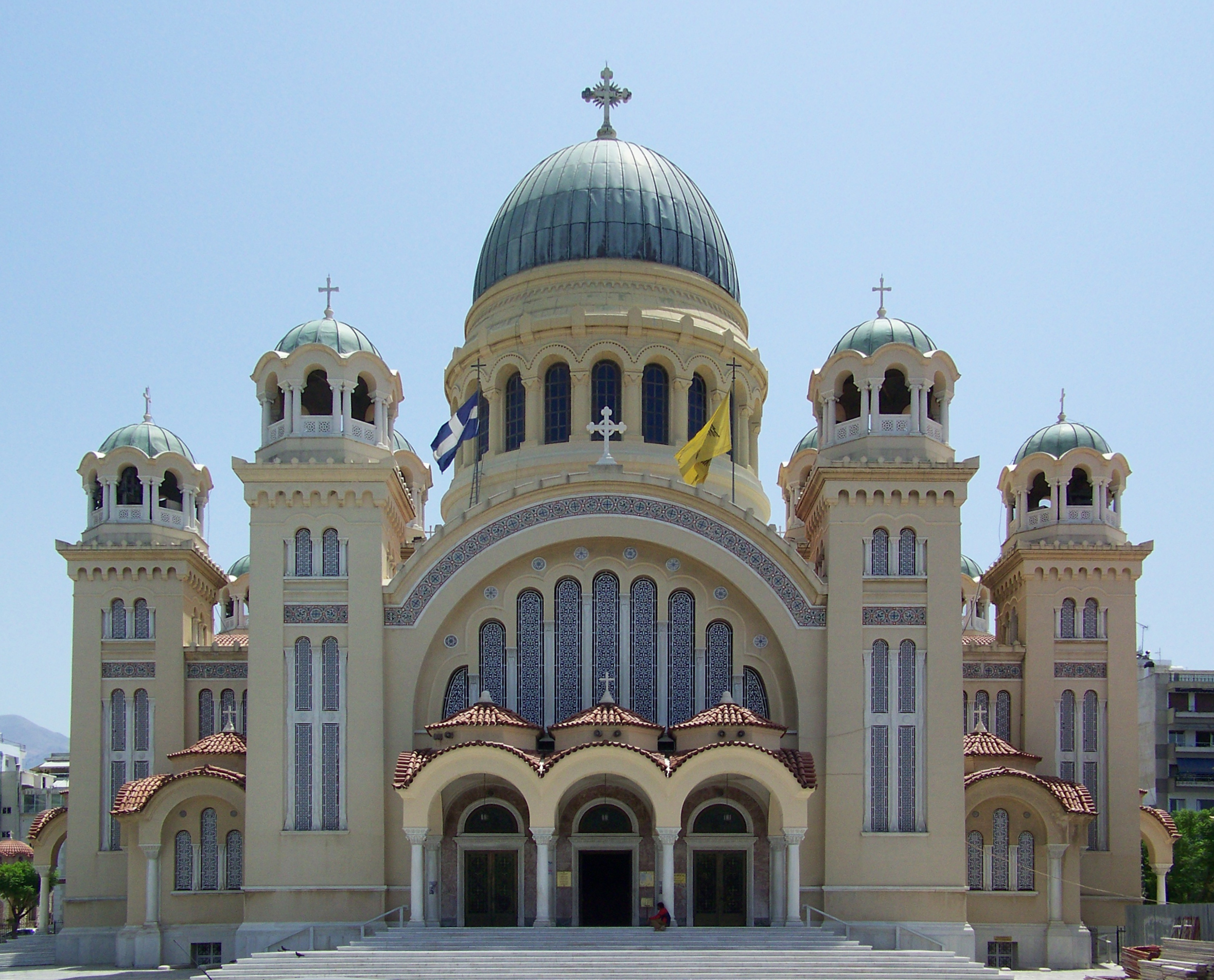
La cathédrale orthodoxe Agios Andreas à Patras, plus grande église de style byzantin dans les Balkans.

L'architecture byzantine a pour berceau l'Empire byzantin et il est d'usage de réserver ce terme aux monuments élevés à partir du règne de Justinien. Ce style s'est diffusé en Europe méditerranéenne : Grèce (Thessalonique, Mistra), Italie (Ravenne, Venise), Sicile (Monreale, Cefalu, Catane) et a inspiré des réalisations en Europe occidentale, telles que l'octogone d'Aix-la-Chapelle ou, en France, la petite église de Germigny-des-Prés. Les premiers monuments de l'Islam (à Jérusalem, Damas) en ont aussi fortement subi l'influence.

Le monument inaugural est la basilique de Sainte-Sophie à Constantinople, qui est à la fois l'archétype du style byzantin et sa plus prestigieuse réalisation.

L'architecture byzantine est caractérisée par les coupoles sur pendentifs en brique. Les extérieurs sont enduits sobrement, alors que les intérieurs sont décorés de mosaïques aux couleurs vives et de lambris de panneaux de marqueterie de marbre.

Influence

Les architectures religieuses des pays d'Europe orientale et de Russie, de confession orthodoxe, s'inscrivent dans la continuité de l'architecture byzantine ou, selon les cas, en représentent des avatars.

Cathédrale Saint-Front de Périgueux

Au XIXe siècle, l'architecture éclectique s'est inspirée de l'architecture byzantine : la basilique du Sacré-Cœur de Montmartre (style dit romano-byzantin), l'église Saint-Augustin, l'Opéra Garnier à Paris, la Cathédrale Saint-Louis de Carthage (style dit byzantino-mauresque), Cathédrale Saint-Front de Périgueux, etc.

  • Portail de l’architecture et de l’urbanisme Portail de l’architecture et de l’urbanisme

Ce document provient de « Architecture byzantine ».

Wikimedia Foundation. 2010.

  
Share  

Regardez d'autres dictionnaires:

  • Architecture byzantine — L architecture byzantine a pour berceau l Empire byzantin et il est d usage de réserver ce terme aux monuments élevés à partir du règne de Justinien. Ce style s est diffusé en Europe méditerranéenne : Grèce (Thessalonique, Mistra), Italie… …   Wikipédia en Français

  • Byzantine Architecture — • A mixed style, i.e. a style composed of Graeco Roman and Oriental elements which, in earlier centuries, cannot be clearly separated Catholic Encyclopedia. Kevin Knight. 2006. Byzantine Architecture     Byzantine Archi …   Catholic encyclopedia

  • Byzantine Art — • The art of the Eastern Roman Empire and of its capital Byzantium, or Constantinople Catholic Encyclopedia. Kevin Knight. 2006. Byzantine Art     Byzantine Art      …   Catholic encyclopedia

  • Architecture Néo-byzantine — La cathédrale Alexandre Nevski de Sofia, par Alexandre Pomerantsev …   Wikipédia en Français

  • Architecture neo-byzantine — Architecture néo byzantine La cathédrale Alexandre Nevski de Sofia, par Alexandre Pomerantsev …   Wikipédia en Français

  • BYZANTINE ARCHITECTURE —    Byzantine culture produced an architectural style that spans over a thousand years and can be found mainly in eastern Europe and the eastern Mediterranean. It originated in modern day Istanbul when the Roman Emperor Constantine established his …   Historical Dictionary of Architecture

  • Byzantine Literature — • The four cultural elements included are the Greek, the Christian, the Roman, and the Oriental Catholic Encyclopedia. Kevin Knight. 2006. Byzantine Literature     Byzantine Literature …   Catholic encyclopedia

  • Byzantine science — played an important role in the transmission of classical knowledge to the Islamic world and to Renaissance Italy, and also in the transmission of medieval Arabic knowledge to Renaissance Italy. Its rich historiographical tradition preserved… …   Wikipedia

  • Byzantine — By*zan tine (b[i^]*z[a^]n t[i^]n), a. Of or pertaining to Byzantium. n. A native or inhabitant of Byzantium, now Constantinople; sometimes, applied to an inhabitant of the modern city of Constantinople. [Written also {Bizantine}.] [1913 Webster]… …   The Collaborative International Dictionary of English

  • architecture — * * * architecture [ arʃitɛktyr ] n. f. • 1504; lat. architectura 1 ♦ L art de construire les édifices. L architecture, art plastique. Règles, technique de l architecture. ⇒ architectonique. Projet d architecture. Architecture militaire (⇒… …   Encyclopédie Universelle